Virtual Masterworks – The Long Walk To Venus
“Godesses of Beauty. Minute details to discover.” Abendzeitung München
Laser projections in 4k quality of European masterworks
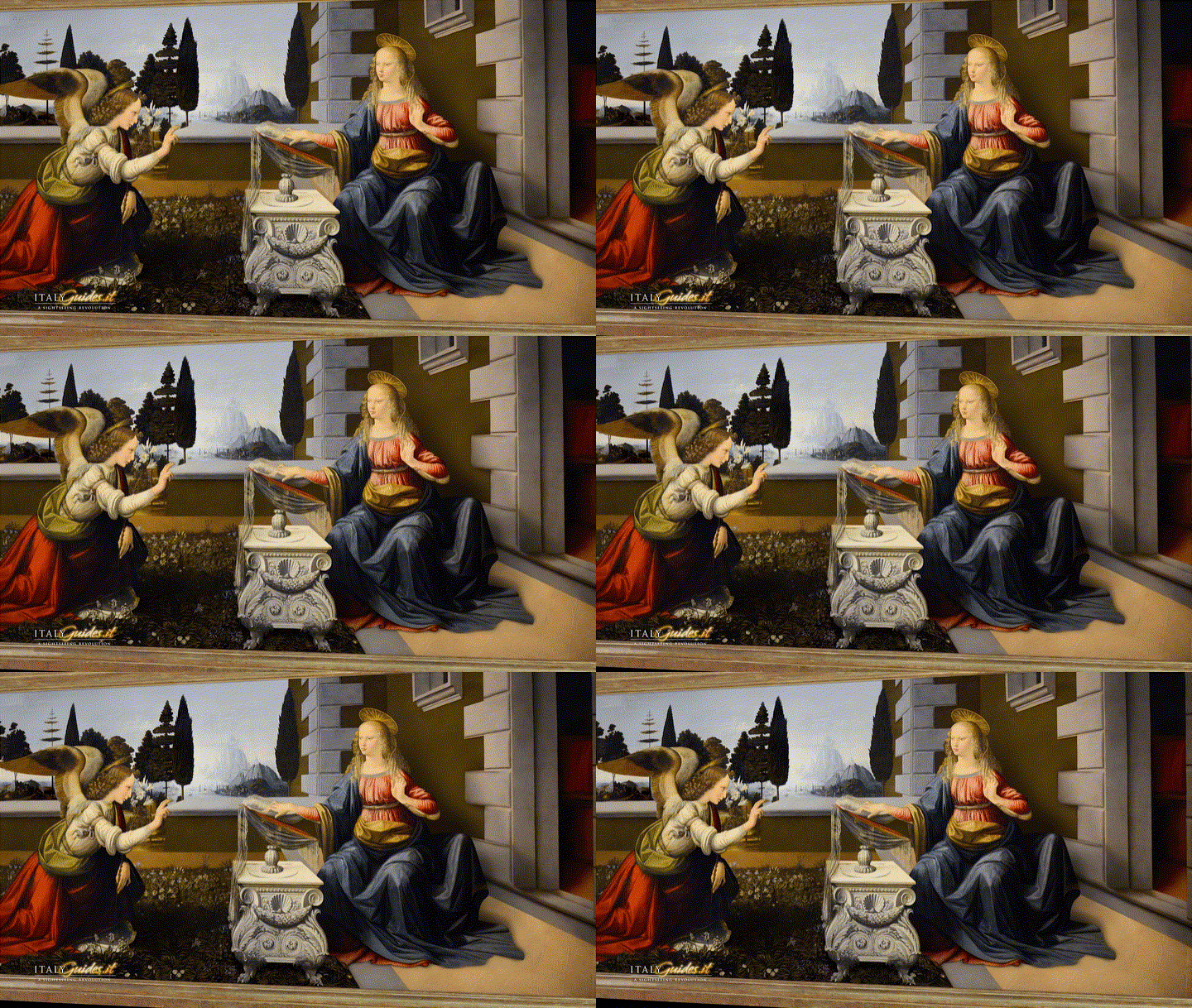
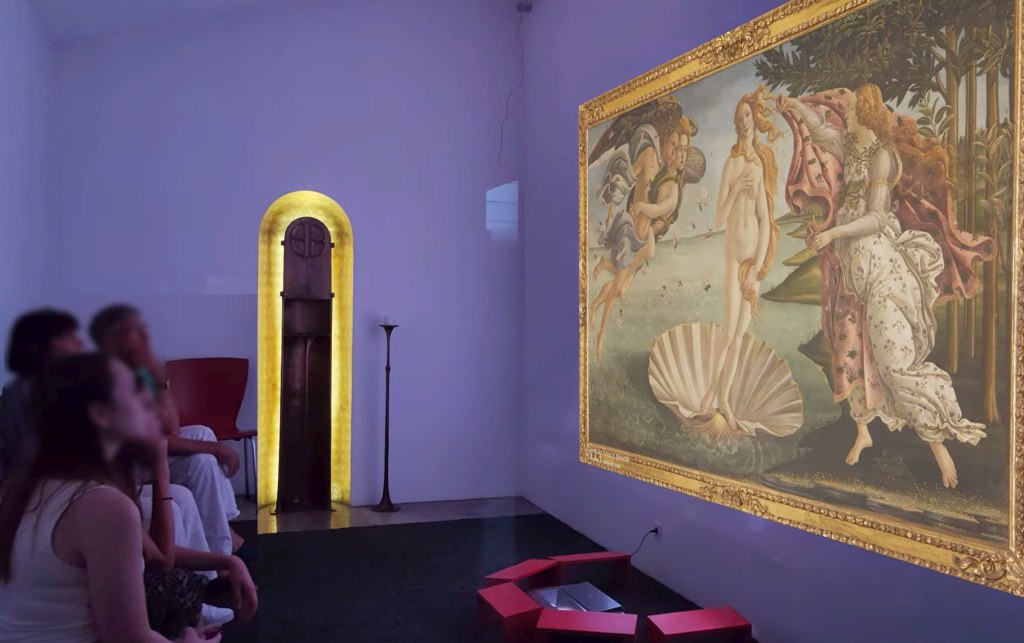
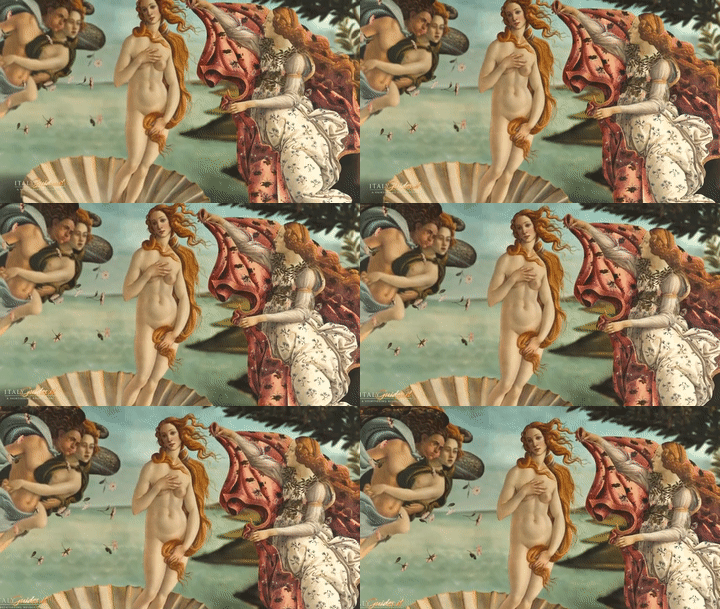
You will experience breathtaking projections of Masterpieces from great museums: Ultra-high-definition laserbeamers & cameras project 3m wide videos, images and animations almost as if you were standing right next to Botticelli´s Venus and other unloanable masterpieces of similar size. With high precision colour and resolution fidelity – and a time limited permission granted by the Italian Ministero della Cultura. Multimedia specialists from Rome have managed to isolate figures from the paintings, creating 3D like sequences. The following text as well as our helpful english speaking entrance staff are ready to answer questions and make your stay worthwhile!
Leonardo´s painting The Annunciation is displayed in a separate room as is Botticelli´s famed Birth of Venus whose antique and Renaissance inspirations are displayed together onto the famous canvas painting projections. The Venus is in some ways more middle age oriented – idealizing not only humans, but also the landscape, whereas Leonardo´s Annunciation shows the backround rather nebulous and foggy – in fact very realistically due to atmospheric phenomena. So despite being created in the mid 1480s, does Botticelli´s Venus point more towards past ideals than Leonardo´s innovative Annunciation from the early 1470s?
Also, we now understand how Leonardo´s Annunciation was possibly meant to appear to the visitor from a right angle, giving more balance to the centre and appreciating intricate details in the distant backround.
- The Birth of Venus by Sandro Botticelli
Sandro Botticelli was one of the most important painters of the Early Renaissance, and his work helped to define the style of the period. His works are full of beauty, grace, and symbolism.
The Birth of Venus was painted in the 1480s, a time when artists were rediscovering the art and culture of ancient Greece and Rome. Botticelli was heavily influenced by classical art, and The Birth of Venus is a perfect example of his synthesis of Renaissance and classical styles. In mythology, Venus was conceived when the Titan Cronus castrated his father, the god Uranus (more explanations below.)
“Ich bin total begeistert – sich mit kurzen Erklärungen intensiv auf Gemälde einzulassen.” Gästebuch

Städel–Frankfurt_am_Main
2. Leonardo da Vinci and his Annunciation
Leonardo da Vinci’s Annunciation is a special painting for a number of reasons: It is one of Leonardo’s earliest extant major works, and it shows his great talent for painting at a young age. Leonardo was at the time, 1472, an apprentice in Andrea del Verrochio´s workshop, where an accomplished painter named Sandro Botticelli was going in and out, being 7 years senior to Leonardo. The composition of the painting is very carefully thought-out by young Leonardo: The two figures are placed in a triangular arrangement… (more explanations below)
3. Middle Age (Mittelalter)
The Medieval age doesn´t have the best reputation. It sounds somewhat “dark”, like in Dark Ages. And is medi-eval something like medium-evil? Well, the “dark” times, they were changing, too, from early post Roman times to the late Gothic. In Germany, thousands of new towns were created between the 12th and 14th century, becoming hubs of commerce and also the arts.
Before that though, great artistic achievements were made, as exemplified by early ivory works. (more explanations below)
4. Dawn of Renaissance (Aufbruch Neuzeit)
In the Middle Ages, when the material world was considered corrupt and sinful and artists largely served as an extension of the church, naturalistic methods of painting were largely neglected. This only changed during the artistic Renaissance in the 15th century, when these ancient painting techniques were rediscovered. Because of the subtle gradations of color required, oil paint was the medium best suited to creating this illusion. Oil painting was first used… (more explanations below.)
Full English texts:
Medieval Art (Mittelalter)
The Medieval age doesn´t have the best reputation. It sounds somewhat “dark”, like in Dark Ages. And is medi-eval something like medium-evil? Well, the “dark” times, they were changing, too,
from early post Roman times to the late Gothic. In Germany, thousands of new towns were created between the 12th and 14th century, becoming hubs of commerce and also the arts.
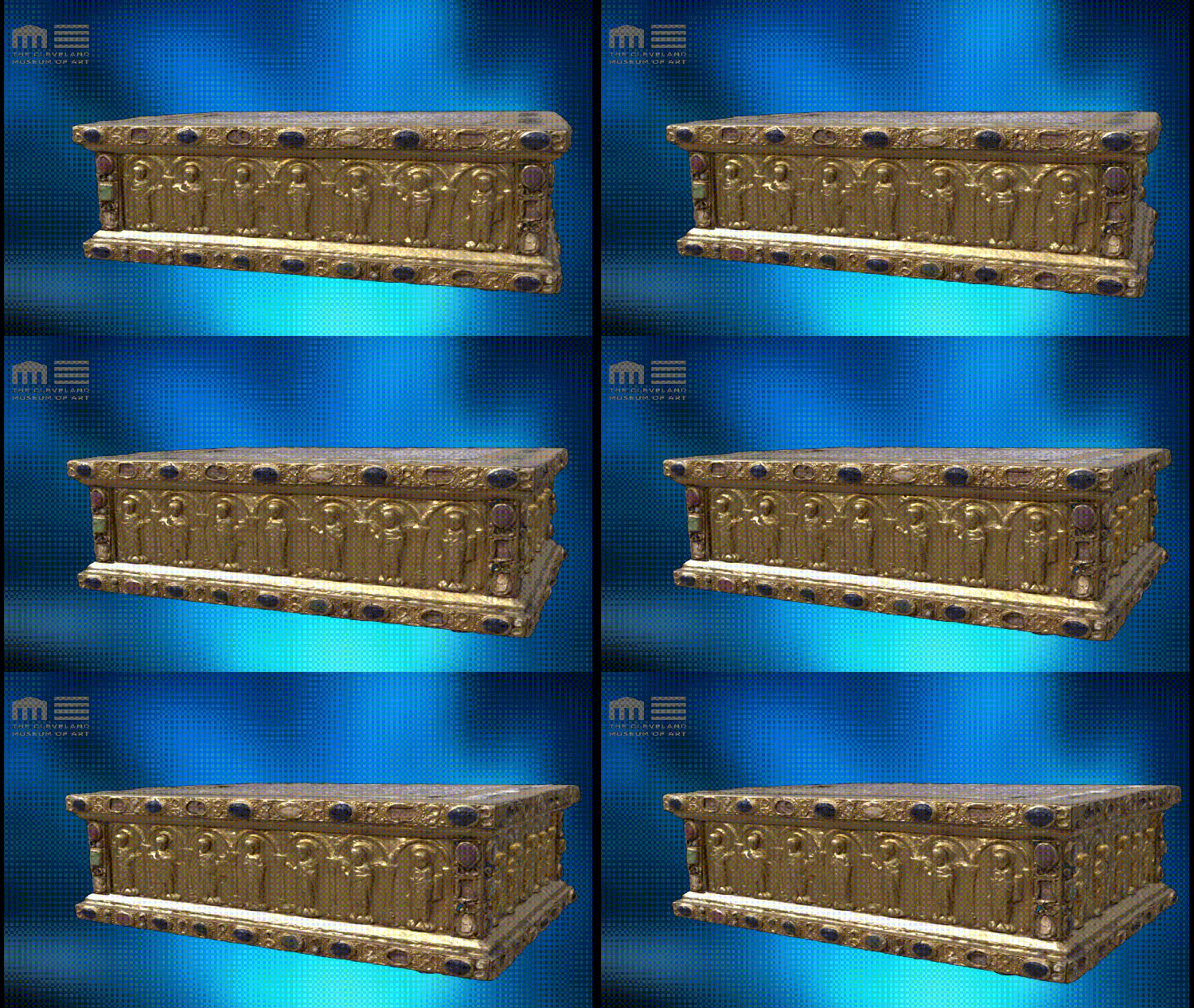
Before that though, great artistic achievements were made, as exemplified by early ivory works, such as the 1st double image: a Bishop as a chess figure on the left and the outstanding „Christ receiving a gift from Emperor Otto“ from the 10th century on the right.
2nd The Byzantine influence on european art is in the second face to face duo, with gold and blue being expensive colours and a testimony to the increasing wealth in the 14th century.
3rd Crisis Themes: Humility, Sins and Salvation shows the sculpture Madonna flanked by St. Catherine and St. John on the left as well as the painting Madonna of Humility on the right, with Eva raising the infamous apple below her, contrasting virtue and sin and highlighting Christ and his mother as soul saviors. Epidemics in the late Middle Ages had decimated the population by a third. With these threats, virtues such as piety and humility counted, so as not to end up in a Dantesque hell.
4th In antiquity, Persians and Romans cultivated the art of stained glass windows. The heyday of glass painting in Europe occured in Gothic times, particularly in France. The first two images show the legend of Germanus of Paris on the left, escaping a poison attempt on the right. The third image shows Emperor Theodosius from the legend of The Seven Brothers, escaping persecution because of their Christian faith.
Dawn of Renaissance (Aufbruch Neuzeit)
In the Middle Ages, when the material world was considered corrupt and sinful and artists largely served as an extension of the church, naturalistic methods of painting were largely neglected. This only changed during the artistic Renaissance in the 15th century, when these ancient painting techniques were rediscovered. Because of the subtle gradations of color required, oil paint was the medium best suited to creating this illusion. Oil painting was first used in early 15th-century Netherlandish painting due to the colder temperatures, but was then also used by Italian artists to achieve the greatest possible level of detail. While most Renaissance artists explored how to use sciences such as geometry to create illusions of depth and distance with linear perspective, Leonardo da Vinci extended his investigations to optics. He is considered to be the artist who first described atmospheric perspective in Europe in his Trattato della Pittura.
Leonardo drew heavily on Leon Batista Alberti who published in 1435 a compendium and this list on how to make paintings more reality like: 1. a space with depth illusion, 2. light and shadow for bodily plasticity, 3. interesting poses of portrayed subjects. Hence the flight perspective was developed, with parallel lines seeming to converge in the distance.
The Italian Renaissance became known for four things: 1 A comprehensive revival of ancient Greco-Roman art forms and styles. 2 A belief in the noble spirit of man (humanism). 3 Mastery of illusionistic painting techniques that increase “depth” in an image. 4 The naturalistic idealism in the depiction of faces and figures, reinforced by oil painting techniques such as sfumato. (from Das Kreative Universum)
Enjoy the Ultra HD quality of the now following images from Raffael, Dürer, da Vinci, Botticelli, Michelangelo and Dutch painters.
Leonardo da Vinci´s Annunciation
Leonardo da Vinci’s Annunciation is a special painting for a number of reasons: It is one of Leonardo’s earliest extant major works, and it shows his great talent for painting at a young age. Leonardo was at the time, 1472, an apprentice in Andrea del Verrochio´s workshop, where an accomplished painter named Sandro Botticelli was going in and out, being 7 years senior to Leonardo.
The composition of the painting is very carefully thought-out by young Leonardo: The two figures are placed in a triangular arrangement, with the angel Gabriel on the left and the Virgin Mary on the right. The lectern in the middle helps to balance the composition, and the landscape in the background provides a sense of depth.
The angel Gabriel is depicted with great realism. His face is expressive, and his wings are beautifully rendered. The wings are based on those of a bird of prey, though the starkly different wing colours seem to indicate that another painter „enhanced“ them.
The Virgin Mary is depicted with great realism. Her face is calm and serene, and her hands are folded in prayer. The painting is full of symbolism: The enclosed garden represents her virginity, and the lily held by the angel represents purity. The landscape in the background represents the new life that will be brought into the world by Jesus Christ.
The painting is also notable for its use of light and shadow. The use of sfumato, a technique that Leonardo developed, creates a sense of depth and atmosphere. The light from the window falls on the angel and the Virgin Mary, but it also falls on the landscape in the background, creating a sense of depth.
Overall, Leonardo da Vinci’s Annunciation is a special painting that is full of beauty, symbolism, and technical skill. It is a masterpiece of Renaissance art, and it is one of Leonardo’s most important works.
Projection: The Birth of Venus by Sandro Botticelli
Sandro Botticelli was one of the most important painters of the Early Renaissance, and his work helped to define the style of the period. His works are full of beauty, grace, and symbolism. He served an apprenticeship under Fra Filippo Lippi, the best Florentine painter of that time. Botticelli made his name with his painting Allegory of Fortitude (1470), and he was subsequently commissioned to paint Birth of Venus for Lorenzo the Magnificent of the Medici family.
The Birth of Venus was painted in the 1480s, a time when artists were rediscovering the art and culture of ancient Greece and Rome. Botticelli was heavily influenced by classical art, and The Birth of Venus is a perfect example of his synthesis of Renaissance and classical styles.
In mythology, Venus was conceived when the Titan Cronus castrated his father, the god Uranus, whose severed genitals fertilized the sea.
The Birth of Venus depicts the moment when, having emerged from the sea in a shell, Venus lands at Paphos in Cyprus. She is attended by two winds who blow her toward the shore, while a nymph is poised to wrap a cloak, decorated with spring flowers, around Venus to cover her nudity. The stance of Venus is believed to be based on classical statuary, which was highly prized in Florence at that time. Despite the unusual proportions of her body—the elongated neck and her overlong left arm—Venus is an arrestingly beautiful figure with her delicate skin and soft-flowing curls fresh from the sea. She is born to the world as the goddess of beauty, and the viewer is witness to this act of creation. She steps off a gilded scallop shell, the winds shower her with roses—each with a golden heart—and the orange blossom on the tree behind her is also tipped with gold. Historically, this is the most important depicted nude since classical antiquity.
Specifics that make The Birth of Venus special:
The use of color: The painting is dominated by the soft, pastel colors of Venus’s skin, hair, and the sea. The egg based tempera paint creates a sense of lightness and airiness, especially with the canvass backround making the colours even more transparent.
The use of light: The painting is bathed in a soft, golden light. This light comes from the left side of the painting, and it highlights Venus’s figure and the landscape behind her. The light also creates a sense of depth and perspective, which helps to make the painting more realistic.
The symbolism: The painting is full of symbolic meaning. For example, the shell on which Venus is standing represents her birth from the sea. The flowers in the nymph’s hand represent springtime and fertility. And the wind gods represent the power of nature.
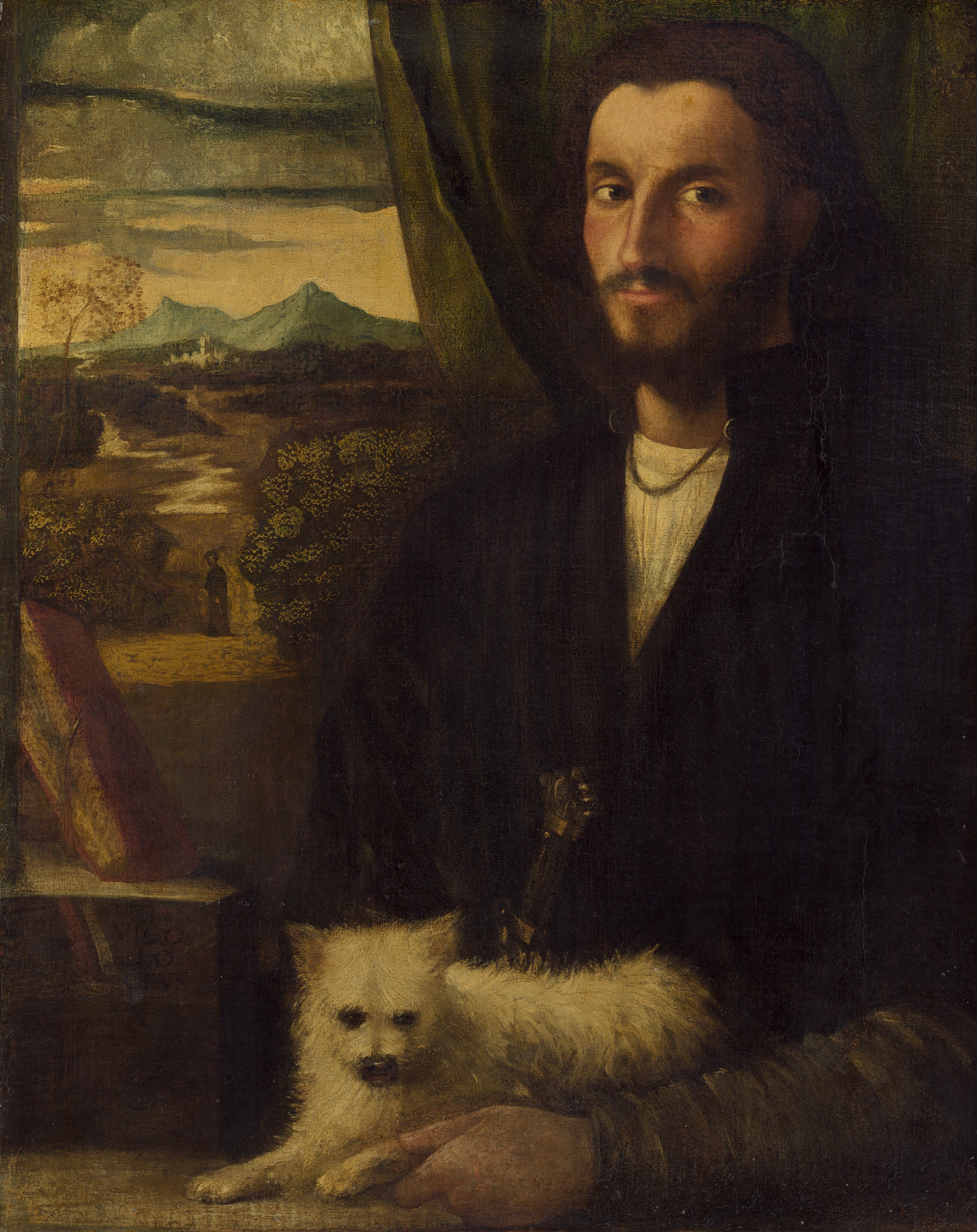
Giovanni Cariani. National Gallery of Art, Washington

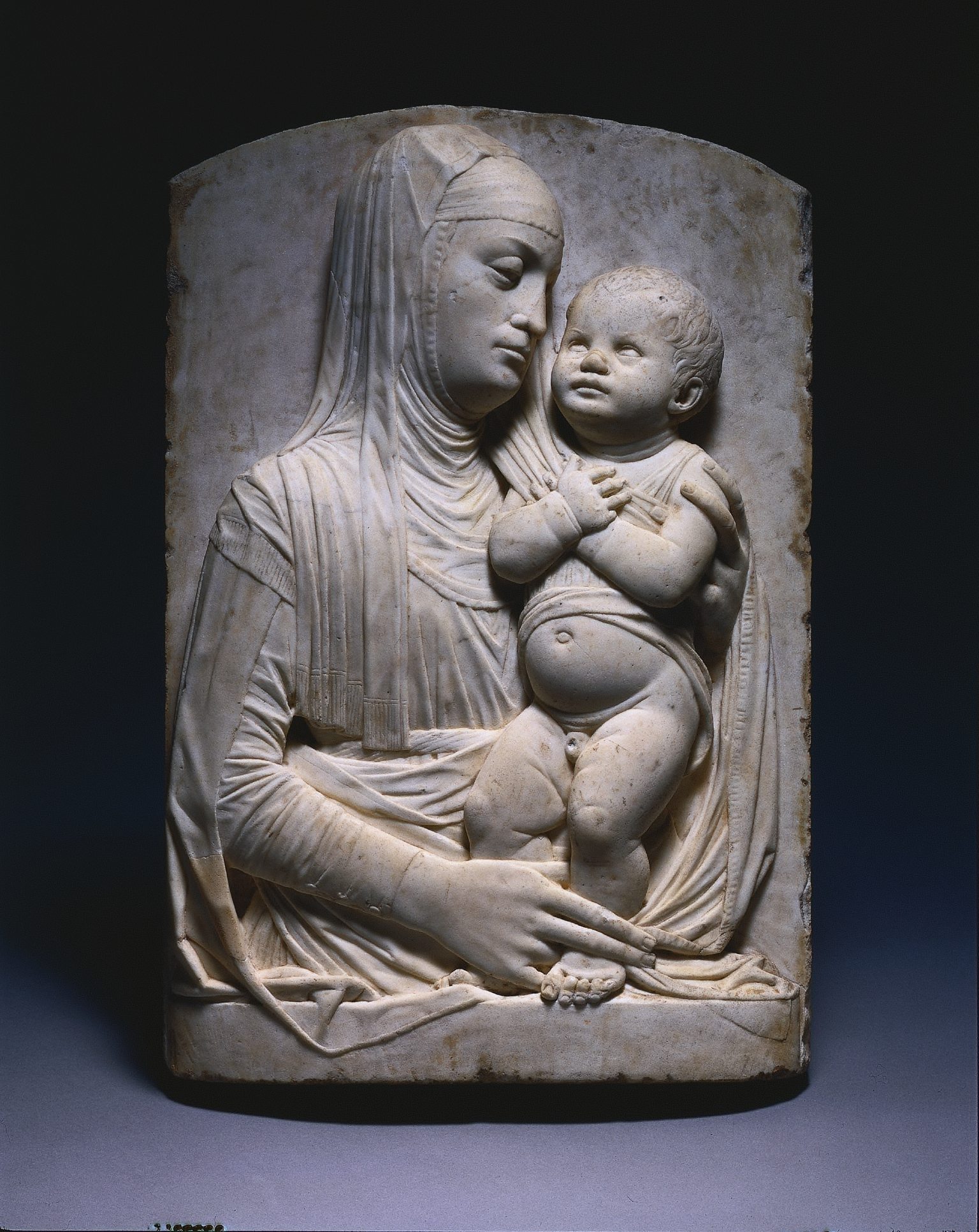

 MAESTROS MANAGEMENT
